
Why Zebra Blinds Over 2.5 m Should Never Use Generic Springs?
 |
|
An OEM-Level Engineering Reality Check
Quick Summary
For zebra blinds wider than 2.5 meters, generic spring systems are not a cost-saving choice.
They are a delayed failure mechanism.
This article explains why off-the-shelf springs cannot maintain torque symmetry,
force stability, or long-term alignment in large zebra blind systems—and why
OEMs must adopt precision torque-matched spring architectures to avoid
uneven lift, tilt, and post-installation returns.
1. The 2.5 m Threshold: Where Zebra Blinds Stop Behaving Like “Normal” Shades
Below 2.0 m, most zebra blind systems are forgiving.Minor torque deviation, small friction differences, and assembly tolerance are often absorbed without visible consequences.
At 2.5 m and above, that tolerance buffer disappears.
Why?
 |
 |
Because width transforms the system from a fabric product into a lever-driven mechanical system:
-
Bottom rail length increases rotational leverage
-
Angular deviation becomes visually amplified
-
Left–right force mismatch no longer self-corrects
At this scale, spring behavior dominates everything.
2. What “Generic Spring” Really Means (and Why It Fails)
In OEM sourcing, “generic spring” usually implies:
-
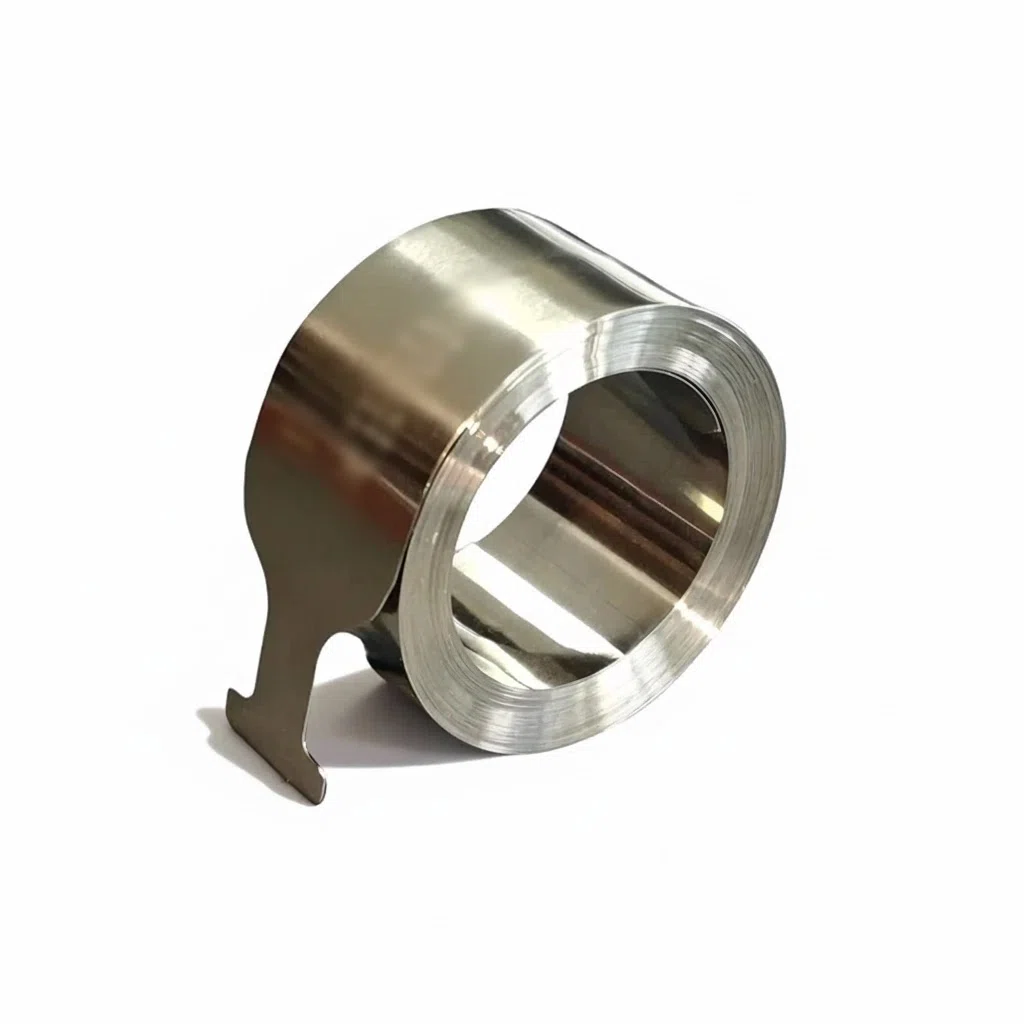
Fixed-rated power or spiral spring
-
No torque curve profiling
-
No left–right pairing or matching
-
No aging compensation strategy
These springs are designed to store energy, not to balance position.That distinction matters.
In large zebra blinds, the lift system must:
-
Hold position at any height
-
Maintain symmetry across width
-
Deliver near-constant force across travel
Generic springs do none of these reliably.
 |
 |
This width threshold marks the point where zebra blinds begin to exhibit
system-level imbalance rather than isolated defects.
A deeper mechanical explanation of how torque mismatch leads to uneven lift
is detailed in our article
Why Large Zebra Blinds Lift Unevenly — And How Precision Torque Engineering Fixes It.
3. Zebra Blinds Are Not Constant-Load Systems
This is the mistake most designs make.
Zebra blinds do not behave like standard roller shades.
During operation:
-
Fabric overlap ratio changes
-
Effective roll diameter varies
-
Center of gravity shifts continuously
That means the required counterbalancing torque is dynamic, not fixed.
This behavior aligns with what we observe in non-linear torque systems,
where small left–right force deviations compound with every operating cycle.
The underlying force–cycle relationship is further explained in
this technical breakdown on uneven lift in large zebra blinds.
Generic springs output non-linear torque by nature.
Once width exceeds 2.5 m, that non-linearity translates directly into:
-
Uneven fabric stacking
-
Progressive bottom-rail tilt
-
Asymmetric wear between left and right sides
No amount of installation adjustment can cancel this out.
4. The Myth of “We Can Adjust It Later”
Installers try.
After-sales teams try harder.
But adjustment only addresses static alignment, not dynamic force behavior.
Once the spring torque curves diverge:
-
Each lift cycle reinforces the imbalance
-
One side ages faster than the other
-
Drift accelerates instead of stabilizing
| Time in Use | Observed Behavior |
| 0–2 months | Appears acceptable |
| 3–6 months | Subtle tilt begins |
| 6–12 months | Visible uneven lift |
| 12+ months | Return / complaint |
This is not bad luck.
It is mechanical inevitability.
5. Aging Is Where Generic Springs Collapse
Springs do not fail suddenly.They drift.
After real-world cycling:
-
Output force decays
-
Friction interfaces change
-
Left–right symmetry degrades
In wide zebra blinds, a 5% force difference is enough to cause visible tilt.
Generic springs are not designed to age symmetrically.
They are not tested as paired systems.
They are not validated under wide-format load conditions.
The result is predictable:
systems that pass factory inspection but fail customers.
6. Why Precision Torque Engineering Is the Only Viable Path
For zebra blinds over 2.5 m, OEMs must shift from component selection to system engineering.
That means:
-
Torque calculated from real fabric + rail mass
-
Near-linear force curves across full travel
-
Left–right spring pairing within ±5%
-
Brake behavior matched to spring output
-
Lifecycle validation beyond initial feel
This is not over-engineering.
It is baseline engineering for large-format systems.
| Approach | Initial Cost | 12–24 Month Outcome |
|---|---|---|
| Generic spring system | Lower | Uneven lift, high returns |
| Adjusted generic spring | Medium | Delayed failure, unstable aging |
| Torque-matched spring system | Higher | Stable alignment, low service cost |
OEMs don’t lose money on springs.
They lose money on returns, replacements, and brand erosion.
FAQ (OEM & Engineering)
1. Is 2.5 m a hard limit, or just a general recommendation?
It is not an arbitrary number. Around 2.5 m, the bottom rail length creates sufficient rotational leverage that small torque asymmetries become visually amplified.
Below this width, tolerance can mask imbalance; above it, physics no longer cooperates.
2. Can higher-quality “generic” springs solve the problem?
No. Material quality alone does not change torque curve behavior.Even premium generic springs still output non-linear torque and lack left–right pairing,which is the core failure mode in wide zebra systems.
3. Why do zebra blinds fail sooner than roller shades at the same width?
Zebra blinds are dynamic-load systems.Fabric overlap, roll diameter, and center of gravity all change during operation,requiring near-constant force output—something fixed-rate springs cannot provide.
4. Can installers correct uneven lift by adjusting tension?
Adjustment only affects static alignment.It cannot correct dynamic torque divergence that develops during repeated cycling.In most cases, adjustment delays failure rather than preventing it.
5. What level of torque mismatch becomes visible to end users?
In wide zebra blinds, a force deviation of approximately 5% between left and right sides
is enough to produce visible bottom-rail tilt and uneven fabric stacking.
6. Why does the system often look fine during factory inspection?
Initial inspections capture only first-cycle behavior.Most failures emerge after 3–6 months, when spring force decay and friction changes begin to diverge asymmetrically.
7. Does adding stronger brakes compensate for generic springs?
No. Over-braking masks symptoms while accelerating wear.Without matched spring output, brake compensation increases instability,noise, and long-term drift.
8. How important is left–right spring pairing in wide systems?
Critical. Wide zebra blinds behave as a coupled mechanical system.Unpaired springs age independently, causing progressive imbalanceeven if initial force ratings appear identical.
9. Is motorization a workaround for spring-related issues?
Not automatically. Motors still interact with spring torque curves.Without proper spring matching, motor load increases,control accuracy drops, and long-term reliability suffers.
10. What is the minimum engineering standard for zebra blinds over 2.5 m?
Torque calculated from real load data,near-linear force curves,paired spring validation within ±5%,
and lifecycle testing beyond initial feel.Anything less is a known reliability risk.
Field Insight
Zebra blinds wider than 2.5 meters do not fail because of poor installation
or fabric quality.
They fail because generic springs were never designed to manage
wide-format torque symmetry over time.
In large zebra systems, precision torque engineering is not a premium feature.
It is the minimum requirement for stability.