
Why Large Zebra Blinds Lift Unevenly — And How Precision Torque Engineering Fixes It
Uneven lift is not a fabric problem.
It is a torque-matching failure inside the spring system.
Quick Summary
In large and extra-wide zebra blinds, uneven lift and bottom-rail tilt are not caused by fabric stretch or tube straightness.
They are predictable system-level failures driven by non-linear spring torque output, left–right force mismatch, and aging-induced imbalance.
This article explains the mechanical root causes and shows how precision torque calculation, constant-force spring architecture, and lifecycle validation eliminate uneven lift at its source.
1. Introduction: The Hidden Cost of Uneven Lift in Large Zebra Blinds
In the North American market, large and extra-wide zebra blinds
are widely adopted for residential and light-commercial projects.
However, for B2B brands and OEMs, uneven lift and bottom-rail tilt have become the No.1 driver of after-sales returns.
The key misconception is blaming fabric deformation or tube straightness.
In reality, when width exceeds 2.0–2.5 meters,the dominant failure mode shifts to the internal spring torque imbalance.
This article builds on our earlier technical guides on contstant force spring systems
andspring–brake synergy,and focuses specifically on zebra blind applications.
2. The Science of Uneven Lift: Why Wide Zebra Blinds Drift and Tilt
2.1 Width Amplifies Torque Errors
As blind width increases, the bottom rail acts as a longer lever arm.
A torque deviation that is negligible at 1.2 m becomes visually obvious at 2.5 m.
- Small torque mismatch → amplified angular deviation
- Asymmetric resistance → visible bottom-rail tilt
- Installer adjustment cannot correct dynamic imbalance
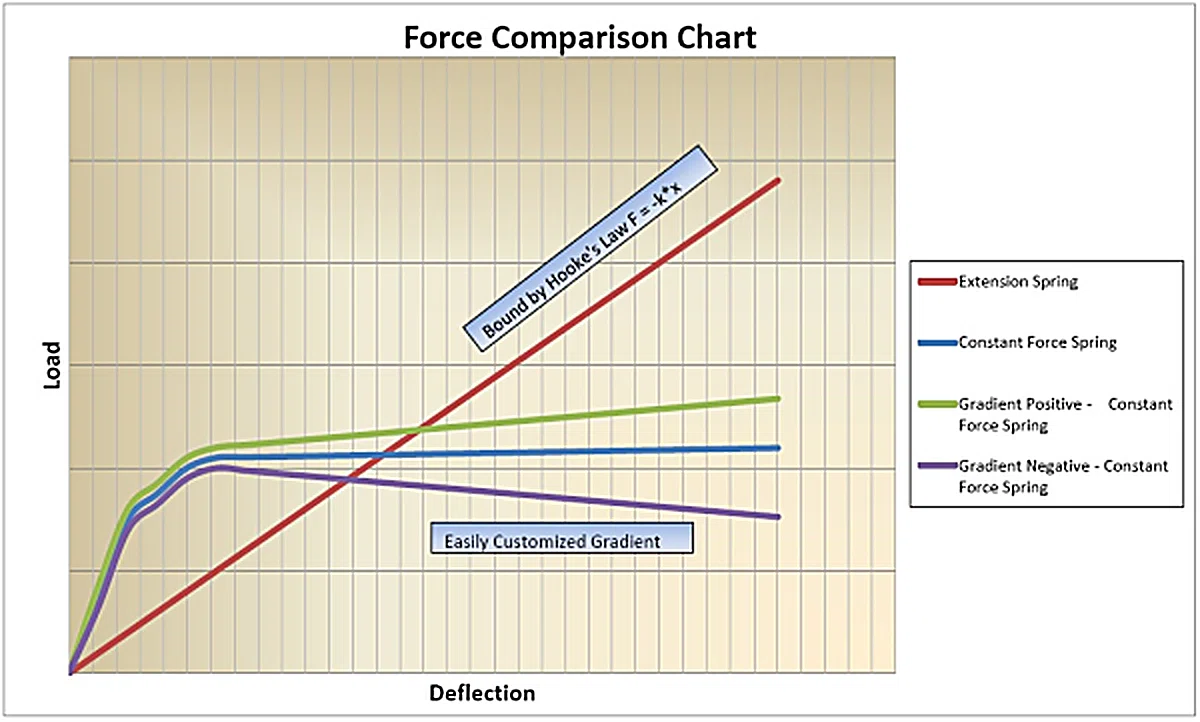
2.2 Non-Linear Torque Curves Create Left–Right Force Drift
Traditional spiral or power springs output torque that varies across travel.
During lifting and lowering, this produces:
- Higher force at one end of the tube
- Uneven fabric stacking
- Progressive tilt after repeated cycles
Once tilt exceeds 5 mm (≈0.5 cm),
end consumers perceive the product as defective — regardless of compliance status.
2.3 Why Installation Adjustment Cannot Fix Uneven Lift
In field installations, installers often attempt to correct tilt by:
- Re-leveling the headrail
- Re-centering the fabric roll
- Manually biasing one side during installation
These actions may temporarily mask the issue, but they do not address the root cause.
Uneven lift in wide zebra blinds is a dynamic force imbalance problem, not a static alignment issue.
Once the spring torque curves on the left and right sides diverge, every lift cycle reinforces the deviation.
As a result:
- Tilt reappears after 50–200 cycles
- Correction attempts accelerate wear asymmetrically
- After-sales complaints escalate instead of stabilizing
3. Engineering Core: Precision Torque Calculation & Matching
3.1 Parameterized Spring Design
For large zebra blinds, spring selection must be calculated — not estimated.
The core inputs include:
- Total fabric weight
- Bottom rail mass
- Tube diameter
- Effective lift height
| Parameter | Typical Range (Large Zebra) | Unit | Engineering Note |
|---|---|---|---|
| Total blind weight | 4.5 – 7.0 | kg | Fabric + bottom rail |
| Tube diameter | 38 / 45 | mm | Directly affects torque arm |
| Target pull force | 20 – 30 | N | User-comfort window |
| Torque tolerance | ±5% | — | Beyond this → visible tilt |
3.2 Why Linear Torque Output Matters
High-precision constant-force springs are engineered to maintain
a near-flat torque curve across the entire travel.
This ensures:
- Consistent hand feel
- Stable mid-position holding
- No cumulative left–right drift
In contrast, non-linear torque systems force the brake to compensate inconsistently — accelerating wear and noise.
3.3 Custom Torque for Extra-Wide Systems
For blinds wider than 2.5 m,off-the-shelf spring ratings are insufficient.
Custom torque profiling is required to:
- Balance asymmetric loads
- Control rebound at top travel
- Maintain long-term alignment
3.4 Zebra Blinds: The Hidden Challenge of Variable Effective Weight
 Unlike standard roller shades, zebra blinds introduce a unique torque challenge:
their effective load is not constant across travel.
As the shade moves:
- Fabric overlap ratio changes
- Effective rolling diameter varies
- Center of gravity shifts dynamically
In wide systems, this variable load amplifies any non-linear torque behavior from the spring.
If the spring force curve is not engineered to remain flat across travel,
left–right imbalance becomes inevitable — even if the system passes initial inspection.
4. Durability Foundation: Lifecycle Testing as a Design Requirement
4.1 Why 10,000+ Cycles Is the Baseline
For B-end manufacturers, 10,000 cycles roughly represent 5–10 years of real-world usage.
Torque stability after aging matters more than initial performance.
| Test Item | Requirement | Failure Risk If Ignored |
|---|---|---|
| Cycle life | ≥10,000 cycles | Post-install drift |
| Force decay | <10% | Heavy pull complaints |
| Noise growth | <40 dB | Perceived quality drop |
4.2 Material Matters Under Long-Term Stress
High-grade alloy steel or stainless steel springs maintain force consistency under repeated bending.
Low-cost materials do not fail immediately —they fail silently, over time.
4.3 Aging Is Predictable — Not a Random Failure
Spring systems do not fail suddenly.They drift.
After 12–24 months of real-world use:
- Spring output force decays
- Brake friction characteristics shift
- Left–right symmetry deteriorates
In non-precision systems, this aging is asymmetric.
Once the force difference exceeds approximately 5%, visual tilt becomes unavoidable in wide zebra blinds.
This is why products that appear stable during factory inspection often become return cases after the first year in the field.
5. The DOSRON Advantage: A System-Level Solution
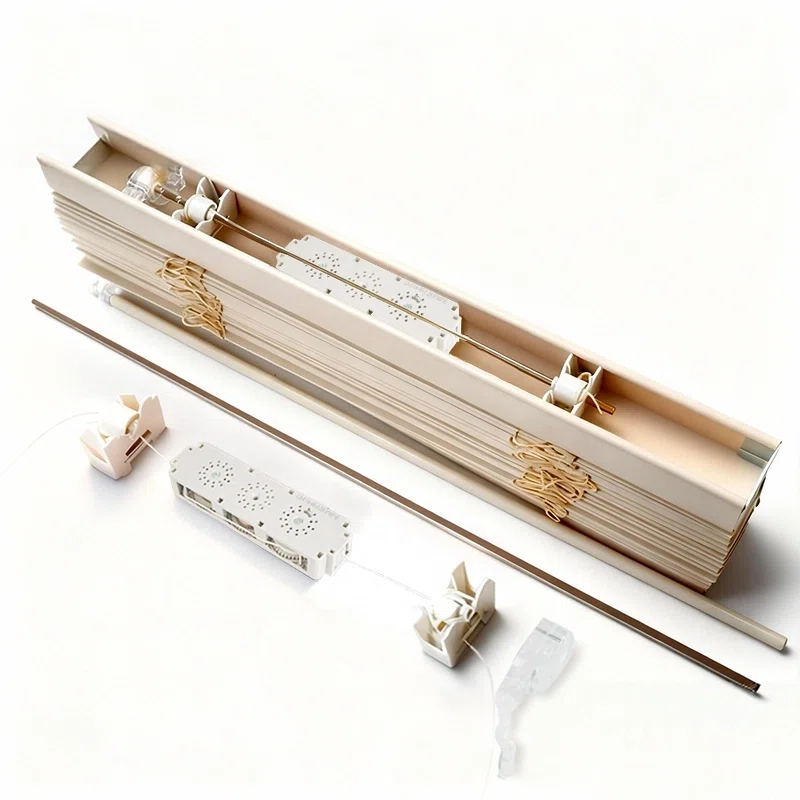
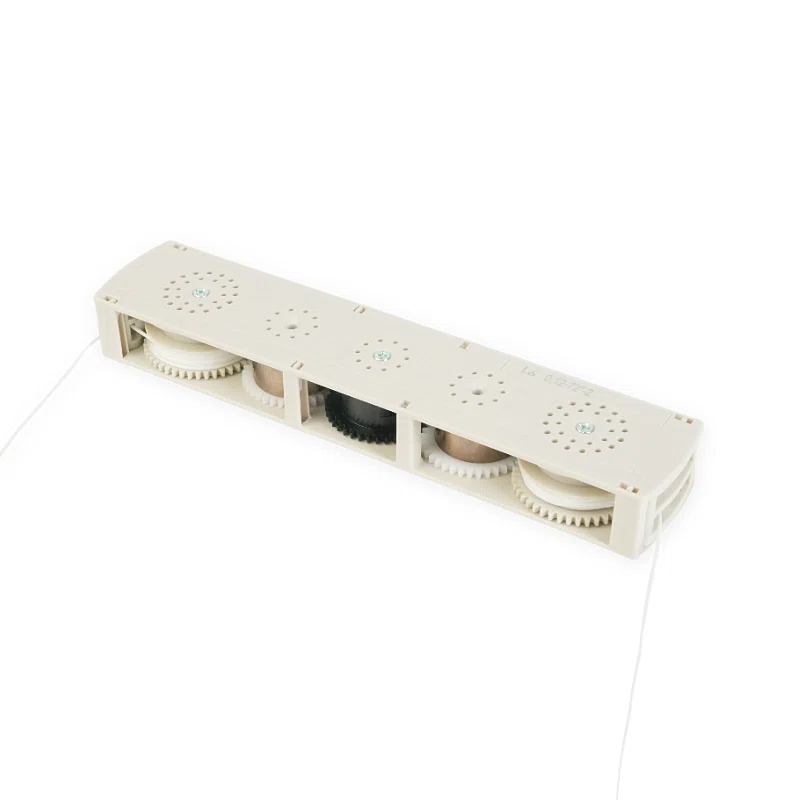
We do not supply springs as isolated components.
Our solution integrates:
- Constant-force spring modules
- Matched braking systems
- Torque validation at system level
 |
 |
Our engineering team supports OEM partners with:
- Pre-project torque calculation
- Prototype tuning
- Stress and aging analysis
In one North American case,this approach reduced failure rates in 2.5 m+ zebra blinds from double-digit returns to near zero.
6. Engineering Decision Matrix for OEM Zebra Blind Projects
| Design Choice | Short-Term Outcome | 12–24 Month Outcome |
|---|---|---|
| Off-the-shelf power spring | Lower unit cost | Progressive tilt, high returns |
| Unmatched left–right springs | Passes initial inspection | Asymmetric aging, instability |
| Precision torque-matched system | Stable operation | Long-term alignment, low service cost |
Field Insight
In wide zebra blinds, uneven lift is not a defect.
It is a delayed consequence of poor force-balance architecture.
Brands that win in large-format cordless systems do not rely on adjustment or tolerance luck.
They engineer torque symmetry, validate aging behavior, and control imbalance before it reaches the customer.