
Are cordless blinds repairable?
 |
Quick Summary
Yes—many cordless blinds are repairable, but “repairable” depends on the internal architecture and whether the headrail was designed for service (modular parts) or for replacement (sealed cartridge).
- Most repairable: modular spring-assisted systems and service-friendly headrails with replaceable spools/shafts/end plugs.
- Often repairable: cordless systems with internal lift cords (no external hanging cords), if cords/spools are accessible and parts exist.
- Least repairable: fully sealed mechanisms, riveted headrails, or discontinued models with no spare parts.
If your blind is slamming up, creeping down, lifting unevenly, or making new noises, the fix is usually one of three things: alignment, load match, or worn control parts—not “mystery magic.”
First: What “Cordless” Really Means (and Why It Matters for Repair)
In most modern products, cordless means no external hanging cords or bead chains. It does not always mean “no cords exist at all.” Many cordless blinds still use internal lift cords routed inside the headrail and behind slats/fabric. This is good for child safety and cleaner aesthetics, but it changes how repairs work: the “problem” is typically inside a tight mechanical chassis, not something you can re-tie from the outside.
The 3 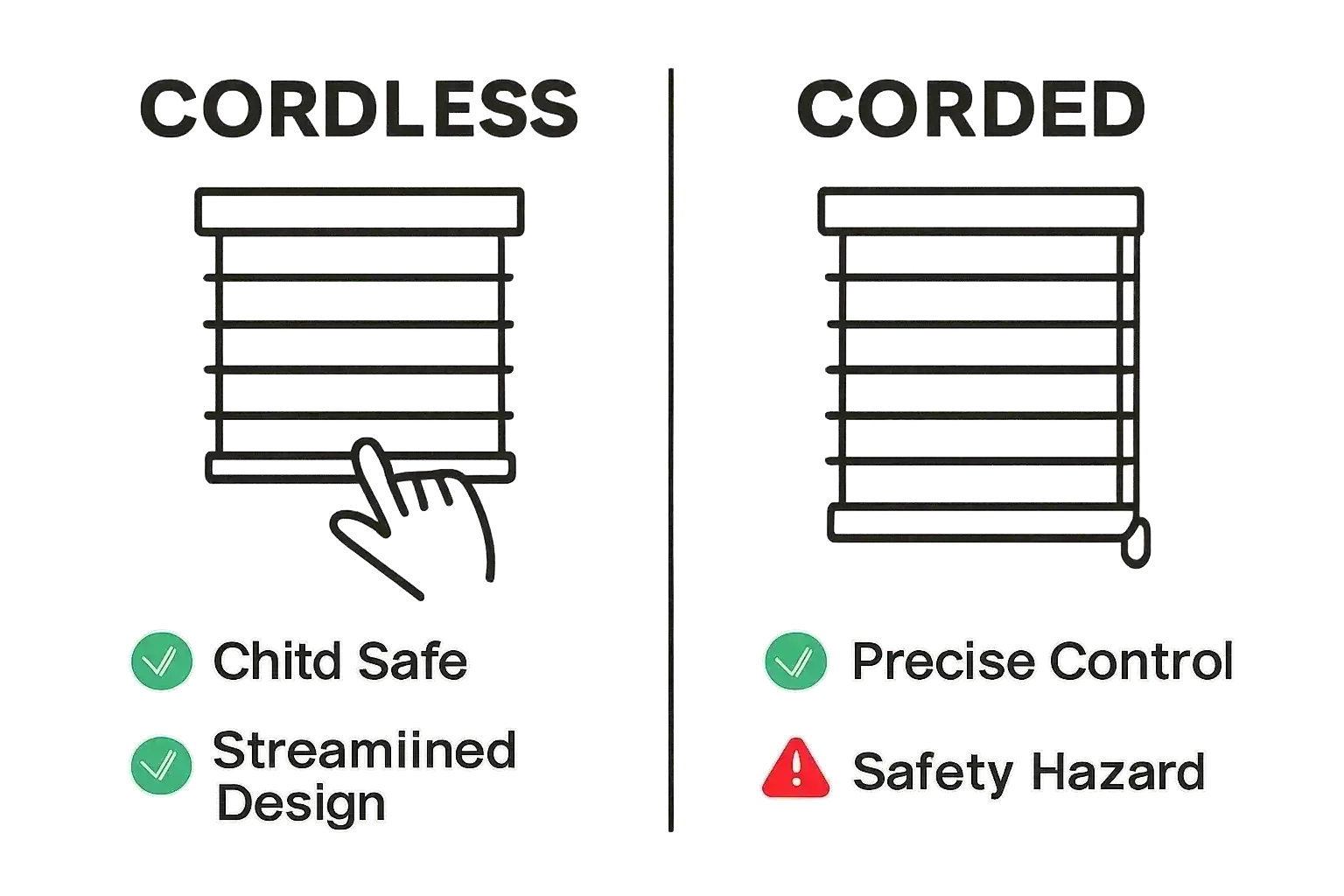 1) Spring-Assisted / Constant-Force Systems (Roller blinds, some shades)
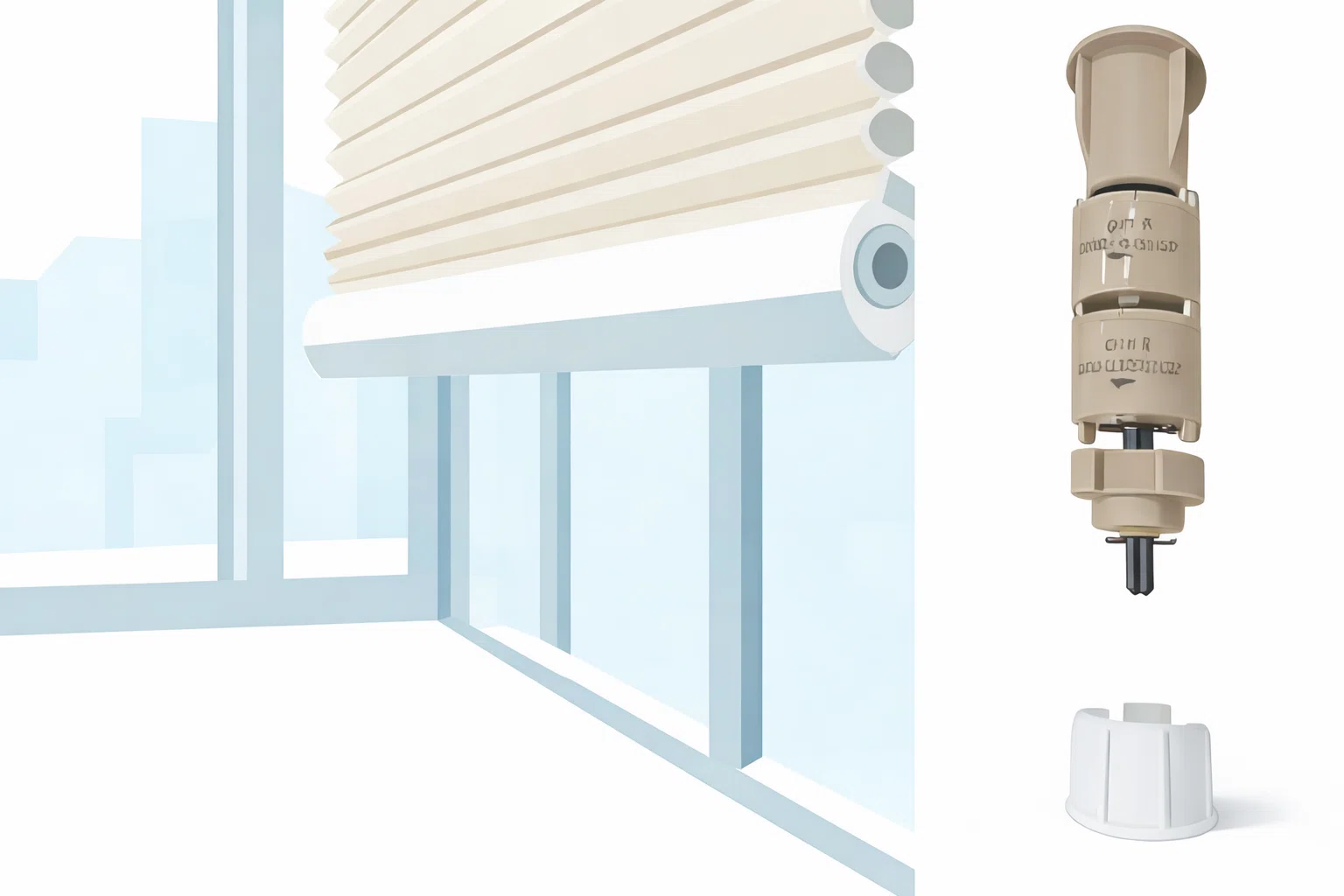
These use a spring module (often a spiral/constant-force spring) plus a transmission stack (shaft/drum) and a speed-control element (brake/damper). They’re highly repairable when the spring module is replaceable and the headrail/tube interfaces are standardized.
- Typical repairs: replace brake/damper, replace spring module, re-seat end plugs, correct shaft alignment, adjust pre-tension.
- Common “not worth it” cases: cracked tube/headrail, deformed brackets causing binding, sealed cartridge with no replacement part.
2) Internal Lift-Cord Systems (Venetian blinds, cellular/honeycomb, Roman shades)
These systems hide the lift cords inside. Repairability depends on whether you can access the cord path, ladders, spools, and cord-lock/drive components without destroying the headrail.
- Typical repairs: rethread/replace internal lift cord, replace cord guide, replace spool/drum, clean debris from cord path.
- High-risk repairs: frayed cords under load, misrouted cords that cause uneven lift or “one side higher.”
3) Motorized Cordless (Battery or wired tubular motor)
Mechanically, these can be repairable, but many brands treat them as “module swap” products. If the motor, drive, and tube adapters are standard, repairs are straightforward; if not, you’re chasing proprietary parts.
- Typical repairs: limit re-setting, replacing battery pack, swapping motor or coupler, correcting bracket alignment.
- Least DIY-friendly: integrated headrails with electronics and sealed control boards.
Before You Open Anything: A Safety + Practicality Checklist
- Check warranty first: opening the headrail often voids it.
- Identify the system: roller vs Venetian vs cellular; spring-assisted vs internal cords vs motorized.
- Photograph every step: cord routing and spacer positions matter more than your confidence.
- Respect stored energy: spring modules can release suddenly; gloves and eye protection are not “overkill,” they’re “still having eyebrows.”
- Don’t bypass safety parts: if the blind had a safety device or designed cord handling, keep it intact.
 |
Quick Diagnosis Table: Symptoms, Likely Causes, and Repairability
| Symptom | Most Likely Cause | Quick Check | Repairability |
|---|---|---|---|
| Blind creeps down after you stop | Brake/damper wear, cord-lock wear, or load mismatch | Does it drift more when fully lowered? Any “click-slip” sound? | Often repairable (replace brake/lock module) |
| Blind slams up / shoots to the top | Brake failed or spring force too high for load | Does rising speed feel uncontrolled even with gentle release? | Repairable (brake + re-match spring/load) |
| Uneven lift (one side higher) | Misrouted internal cords, shaft not coaxial, bracket not level | Check bracket level; inspect cord path symmetry | Repairable but precision-sensitive |
| Hard to pull down / “sticky” motion | Friction, debris in headrail, alignment error, or spring mismatch | Listen for rubbing; check end plugs for scraping marks | Often repairable (clean + re-align) |
| Grinding / squeaking / new noise | Dry friction, worn guides, eccentric rotation | Noise near one end? Check bearing/end plug fit | Often repairable (replace guides/bearings) |
| Frayed internal lift cord | Abrasion at guides, misrouting, sharp edge | Look for a single “hot spot” where fibers are cut | Repairable if cord path is accessible |
| Cracked headrail, bent tube, broken mounting points | Structural failure | Visible deformation or loose rivets/clips | Replace (repair rarely holds) |
When Repair Is Smart vs. When Replacement Is the Better Call
Repair is usually smart when:
- You can source spare modules (brake, spring unit, spool, end plug, cord guides).
- The headrail/tube is straight and brackets are stable.
- The failure is a “wear part” (cord, guide, brake) rather than a cracked structure.
Replacement is usually smarter when:
- The blind is a sealed or riveted design with no service access.
- Core structure is damaged (tube/headrail deformation causes permanent friction and recurring failure).
- Parts are discontinued (your time becomes the most expensive component).
OEM/Brand Perspective: How to Make Cordless Blinds Repairable (Without Making Them “Complicated”)
If you’re designing for the real world, “repairable” often means modular and diagnosable, not “a technician must perform surgery.” Practical design choices that improve repair outcomes:
- Modular drive stack: separate spring module + brake + shaft interfaces so one worn part doesn’t scrap the whole blind.
- Serviceable headrail access: clips/screws instead of one-way rivets where feasible.
- Standardized interfaces: tube adapters, end plugs, and brackets that don’t require “brand-only” geometry.
- Documented cord routing: routing diagram in packaging (or QR code) to prevent “fix attempts” that create uneven lift.
- Defined performance checks: quick QC targets for pull force and rising speed so field teams know what “good” looks like.
If you want to connect this with product engineering content, you can internally link to:
FAQ
1) Can I repair cordless blinds myself?
Sometimes. Basic fixes (re-seating brackets, cleaning debris, replacing accessible guides) are DIY-friendly. Spring modules and complex cord routing are “DIY only if you can document and reassemble precisely.”
2) Why does my cordless blind drift down after I stop?
Common causes are brake wear, cord-lock wear, or load mismatch (the system can’t hold the weight consistently).
3) My blind lifts unevenly—what’s the fastest root-cause check?
Check bracket level and end-plug seating first. If the drive axis is not aligned, friction spikes on one side and the blind tracks unevenly.
4) Are spring-assisted cordless roller blinds repairable?
Yes—often very repairable if the design uses replaceable spring/brake modules. Sealed cartridges with no spare parts are the exception.
5) If the internal cord is frayed, can I just tie a knot?
That’s the fastest way to create a new friction point. Replace the cord and fix the abrasion cause (sharp edge, misrouted guide, damaged grommet).
6) What’s the biggest mistake people make during cordless blind repair?
Assuming “cordless” is simple. It’s usually a compact drive system—misalignment or wrong reassembly can make the blind worse than before.
7) How do I know if my system is “modular” and service-friendly?
If you can remove end caps/headrail covers cleanly and see distinct replaceable parts (brake, spool, spring module, shaft) without destructive steps, it’s likely serviceable.
Field Insight
Most “unfixable” cordless blind failures aren’t mysterious—they’re physics: alignment, friction, and force matching. In spring-assisted systems, a good target is keeping operation forces in a comfortable band (for example, downward pull ≤ 30N) and avoiding aggressive release speeds, so the blind doesn’t feel heavy or snap upward. :contentReference[oaicite:0]{index=0}
Also, treat alignment like a first-class requirement: if coaxiality deviation grows beyond about 0.2mm, eccentric operation can drive uneven lift, noise, and accelerated wear—meaning a “repair” that ignores alignment may fail again quickly. :contentReference[oaicite:1]{index=1}
Translation: the best repair strategy is often “restore the geometry” (level brackets, centered shaft, clean routing) before you replace parts. It’s less dramatic, but your blind will stop auditioning for a percussion band.
Cordless blinds can be repairable—but only if you know what’s inside the headrail. This guide shows what to fix, what to replace, and why alignment matters.