
Why Spring Torque Consistency is the Backbone of Premium Cordless Blinds
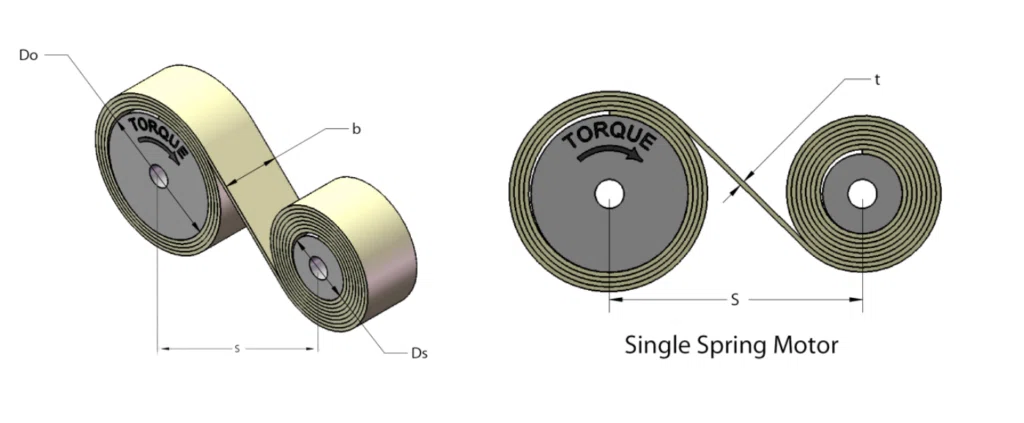
In premium cordless blinds, torque consistency isn’t a comfort feature.
It’s the engineering condition that prevents drift, rebound, noise, and long-term field failure.
Quick Summary
Premium cordless blinds succeed or fail on one invisible variable: spring torque consistency.
When torque output stays inside a narrow band across the full travel (and after aging),
the blind holds position, moves quietly, and feels “expensive” without needing aggressive braking.
When torque varies, the system becomes reactive: drift, slam-up rebound, uneven lift, and noise show up—often months after launch.
Contents
- Cordless Blinds Are Force-Balance Systems
- What “Torque Consistency” Means (Engineering Definition)
- Why Torque Variation Creates Predictable Failures
- Why Constant-Force Architecture Scales Better
- Numeric Targets: Premium vs Entry-Level
- A Simple Aging Example (Why Year-2 Matters)
- OEM Validation Checklist
- FAQ
1) Cordless Blinds Are Force-Balance Systems
Below roughly 1.8 m width, many cordless blinds appear “forgiving.”
Above ~2.2–2.5 m (especially with heavier fabrics or longer drops),
small force inconsistencies stop hiding.
At scale, the system behaves like a rotating mechanical platform:
- Bottom rail becomes a longer lever arm (small torque errors become visible tilt).
- Tube ends become torque reference points (left–right mismatch shows up as uneven lift).
- Spring is the primary energy source (it sets the force band).
- Brake is the governor (it controls motion inside the band— it can’t “fix” the band).
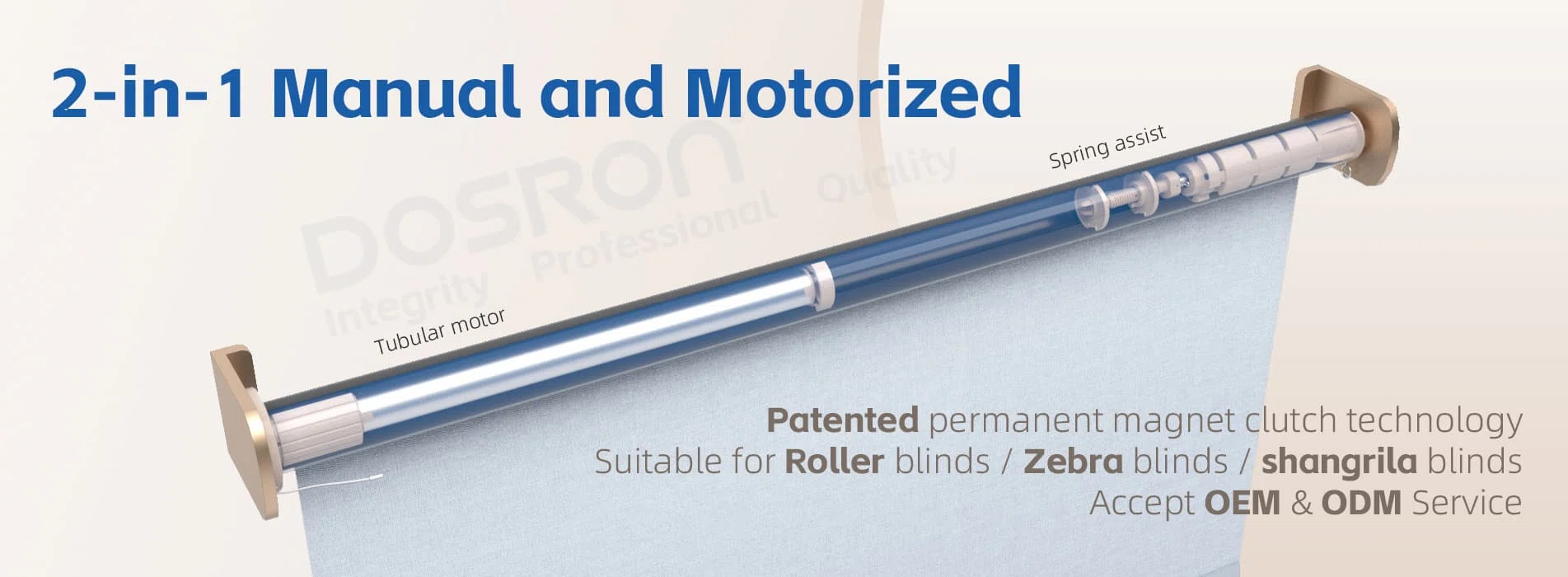
That’s why torque consistency is the backbone: it defines whether the system behaves predictably in the field.
2) What “Torque Consistency” Means (Engineering Definition)
Torque consistency is not “smooth feel” or “low friction.”
It is the ability of the spring module to maintain output inside a narrow window:
- Across the full travel (top to bottom, not a single-point pull test)
- Across production (unit-to-unit repeatability)
- After aging (wear-in, lubrication migration, friction changes, spring relaxation)
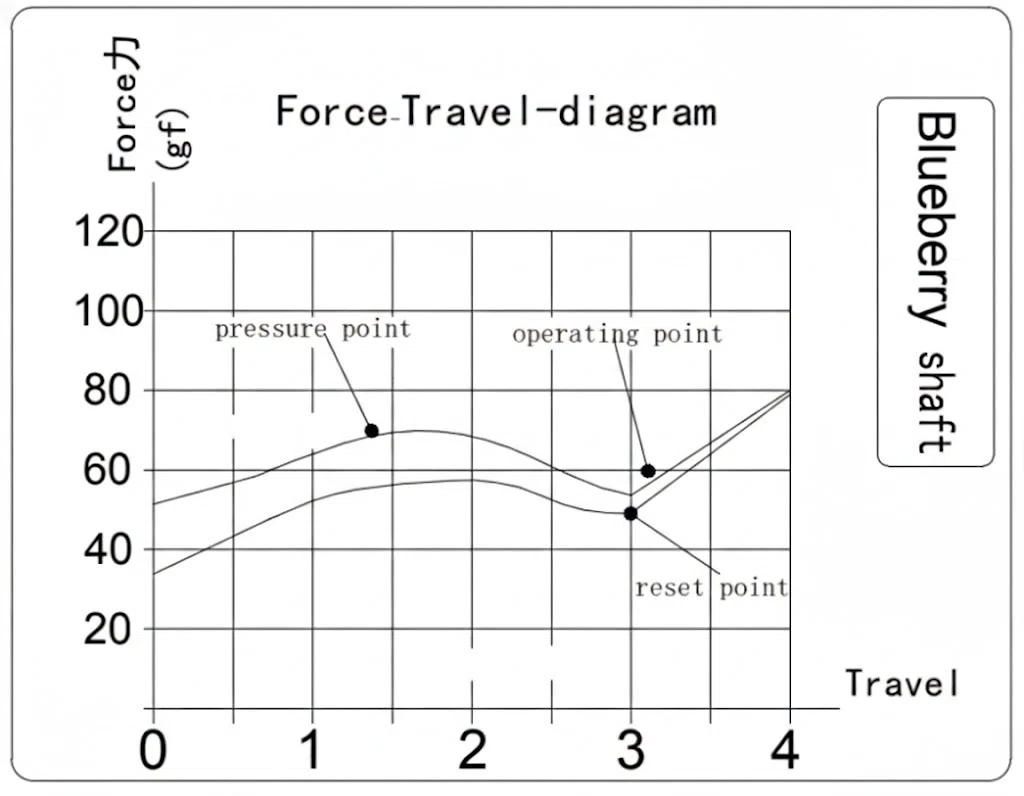
Premium platforms are engineered so the spring output and brake authority remain matched over time,instead of drifting apart.
3) Why Torque Variation Creates Predictable Failures
When spring torque is non-linear or unstable, the brake is forced into permanent compensation.
That’s where real-world failures cluster:
- Mid-height drift / sag: holding band collapses when output drops below the balance threshold.
- Top rebound (“slam-up”): stored energy releases too fast near the top without controlled damping margin.
- Excess pull-down force: torque spikes at certain travel zones, creating a “heavy” feel.
- Noise complaints: chatter from stick-slip and tolerance wear when the system keeps correcting itself.
- Uneven lift: torque mismatch + width leverage produces visible bottom-rail tilt.
In short: drift, rebound, and noise are rarely random defects.
They are predictable outcomes of poor torque behavior.
4) Why Constant-Force Spring Architecture Scales Better
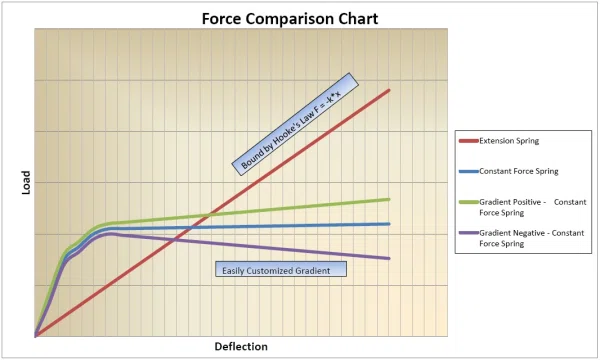
Constant-force spring architecture is designed to keep output closer to a flat band across the stroke.
That gives the brake a stable environment to govern motion, instead of fighting the spring.
System-level benefits of stable torque output include:
- Predictable damping: less risk of chatter bands after wear-in.
- Stable positioning: reduced mid-height drift sensitivity.
- Lower noise floor: fewer micro-corrections and less interface instability.
- Better scalability: wide blinds amplify errors, so flatter torque bands matter more.
5) Numeric Targets: Premium vs Entry-Level (Field-Driven)
The numbers below represent realistic engineering targets used to separate “good on day one” from “stable in year two.”
| Metric | Entry-Level Reality | Premium Target | Why It Matters |
|---|---|---|---|
| Torque variation over travel | ±15–25% | ≤ ±5% | Controls drift/tilt amplification on wide blinds |
| Downward pull force | 35–45 N | 20–30 N | User effort, perceived quality, safety comfort |
| Mid-height holding stability | Drift is common | No drift allowed | Most “premium feel” is position stability |
| Top rebound / slam-up risk | Medium–High | Controlled / damped | Impact noise + field safety perception |
| Operational noise (new) | 45–55 dB | ≤ 35–40 dB | Luxury signal; also indicates interface health |
| Torque decay after 50k cycles | 15–25% | ≤ 7–10% | Year-2 stability and warranty/recall risk |
6) A Simple Aging Example (Why Year-2 Matters)
Consider a cordless blind with an effective load equivalent of 28 N.
A stable platform typically targets spring output around ~30 N (about +7%) to overcome friction without becoming heavy.
Scenario A: Poor Torque Control
- New: spring output ~34 N (feels “fast” and slightly heavy)
- After 12–18 months: spring output drops to ~28 N (holding band collapses)
- Result: mid-height drift, brake over-compensation, chatter/noise emerges
Scenario B: Premium Torque-Controlled Spring
- New: spring output ~30 N
- After 50k cycles: spring output ~27.5–28 N (still inside stability window)
- Result: stable hold, controlled rise, fewer noise complaints
Premium brands don’t buy springs for today. They buy torque behavior for year three.
7) OEM Validation Checklist (Before You Approve a Cordless Platform)
If you want to reduce warranty risk, validate torque behavior like an engineer—not like a shopper.
A serious platform should provide:
- Full-travel force/torque curve (not only a single-point pull test)
- Unit-to-unit consistency data (batch repeatability)
- Aging validation (40k–50k cycle comparison before/after)
- Matched brake validation (brake tuned to a stable torque band, not forced to compensate)
- Noise after wear-in (not just noise when new)
FAQ: Spring Torque Consistency in Cordless Blinds
Q1: Can a stronger brake solve spring torque inconsistency?
Not reliably. Increasing brake friction can temporarily mask drift,
but it usually introduces new problems: higher pull-down force, stick-slip chatter, and accelerated wear.
A brake regulates motion.
It cannot correct unstable force input from the spring.
Long-term stability requires torque control first, braking second.
Q2: Does “smooth hand feel” prove torque consistency?
No.
Smooth hand feel often comes from low friction, not stable force output.
A system can feel smooth when new and still suffer from torque decay, drift, or rebound after aging.
Torque consistency must be verified with:
-
Full-travel force/torque curves
-
Before-and-after aging data
Not subjective feel tests.
Q3: Why does torque consistency matter more for wide blinds?
Because width amplifies error.
As blind width increases:
-
The bottom rail acts as a longer lever arm
-
Small torque mismatches turn into visible angular deviation
-
Left–right imbalance no longer self-corrects
At large widths, installer adjustment cannot fix dynamic imbalance caused by inconsistent torque.
Q4: What’s a practical target band for premium cordless systems?
As a general benchmark, premium cordless systems aim for:
-
≤ ±5% torque variation across the full travel
-
≤ 7–10% torque decay after 40k–50k lifecycle cycles
Anything looser than this typically results in mid-height drift, noise, or rebound over time.
Q5: Why do some systems pass lab tests but fail in real homes?
Because lab tests measure static compliance, while real homes expose dynamic aging behavior.
In the field:
-
Springs relax
-
Friction interfaces change
-
Lubricants migrate
-
Tolerances wear
If torque consistency isn’t engineered for aging, a system can pass certification and still fail in year two.
Q6: Is torque consistency more important than spring strength?
Yes.
Excessive spring strength increases:
-
Pull-down force
-
Rebound risk
-
Brake stress
What matters is not maximum force, but force stability within a narrow operating window.
A slightly weaker but stable spring outperforms a strong but inconsistent one.
Q7: Can software or motor control fix torque inconsistency in hybrid systems?
Only partially.
In hybrid or motor-assisted systems, software can limit speed or peak load,
but it cannot eliminate mechanical imbalance caused by unstable spring torque.
Unstable torque still leads to:
-
Noise
-
Position drift
-
Uneven loading on motors and gearboxes
Mechanical consistency remains the foundation.
Q8: How does torque inconsistency affect noise performance?
Noise is often a symptom, not the root cause.
When torque fluctuates:
-
Brakes enter stick-slip zones
-
Components micro-correct repeatedly
-
Tolerances chatter under alternating load
Quiet systems are usually torque-stable systems.
Noise complaints often appear after wear-in, not on day one.
Q9: What data should OEMs request to verify torque consistency?
At minimum, OEMs should request:
-
Full-travel torque or force curves (not single-point pull values)
-
Unit-to-unit variation data
-
Lifecycle testing results (before/after 40k–50k cycles)
-
Confirmation that spring and brake were validated as a matched system
If this data is missing, the risk is unknown.
Q10: How does torque consistency reduce warranty and recall risk?
Torque-consistent systems:
-
Maintain stable pull force over time
-
Avoid rebound and drift complaints
-
Reduce noise-related returns
-
Behave predictably after aging
In short, torque consistency converts mechanical uncertainty into managed risk,
which is exactly what premium brands and regulators care about.
Field Insight
Torque consistency is the quiet divider between “premium” and “problematic.”
If a cordless system needs aggressive brake tuning to feel stable, it’s usually a spring issue in disguise.
The best platforms engineer a torque band the brake can govern—quietly, repeatably, and after aging.
In cordless design, smooth feel is not low friction.
It is well-managed force.
Related reading:
Maintenance-free cordless lift systems |
Spring–Brake synergy