
Why Cordless Blinds Are Force-Balance Systems, Not Fabric Products
Why Cordless Blinds Are Force-Balance Systems, Not Fabric Products Cordless blinds fail not because the fabric is wrong, but because the force balance collapses. Once you stop treating them like textile products, their behavior becomes predictable. Quick Summary Cordless blinds are often marketed as simplified window coverings, but mechanically they are force-balance systems. Gravity, stored […]
Why Spring Torque Consistency Is the Backbone of Premium Cordless Blinds
Why Spring Torque Consistency is the Backbone of Premium Cordless Blinds In premium cordless blinds, torque consistency isn’t a comfort feature. It’s the engineering condition that prevents drift, rebound, noise, and long-term field failure. Quick Summary Premium cordless blinds succeed or fail on one invisible variable: spring torque consistency. When torque output stays inside […]
Why Does a Cordless Shade Drift or Jump? Spring Torque Tuning for Smooth, Stable Lift
Why Does a Cordless Shade Drift or Jump? Spring Torque Tuning for Smooth, Stable Lift Cordless should not “walk itself.” If your shade slowly slips after you stop it (drift), or pops upward the moment you let go (jump), it’s rarely “bad luck.” Most of the time it’s a mismatch between the spring torque curve […]
Dissecting the top rail of a cordless blind
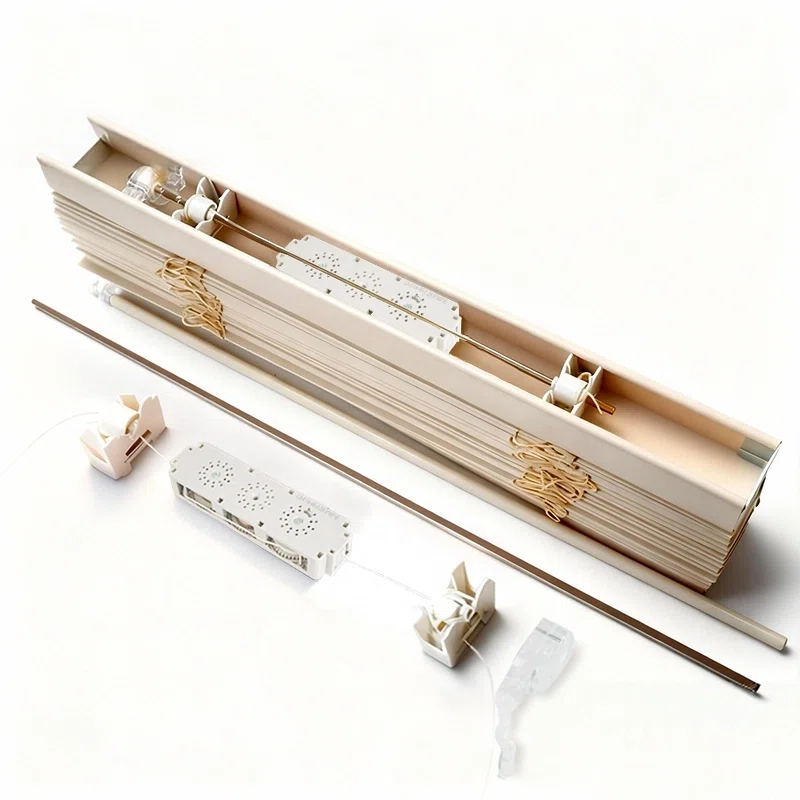
Dissecting the Top Rail of a Cordless Blind: The Precision Chassis Hidden in Plain Sight Quick Summary The top rail (headrail) of a cordless blind is not “just a cover.” It is a space-constrained mechanical chassis that must keep the spring engine, spooling logic, brake/damper, and transmission shaft aligned under thousands of cycles. When integration […]