
Why a $0.50 Cheaper Spring Can Cost $50 Later?
 |
|
In cordless systems, cost doesn’t disappear.
It just moves—from the BOM to the field.
Quick Summary
A $0.50 cheaper spring rarely saves $0.50.
In cordless lift systems, spring quality directly affects pull force stability, noise behavior, aging drift, warranty rates, and field failure risk.
What looks like a minor BOM optimization often converts into $30–$50 of downstream cost through returns, service labor, brand damage, and lost reorders.
This article breaks down the math—mechanically and commercially.
In sourcing meetings, springs are often treated as “small parts.”They’re quoted by weight, thickness, or unit price.
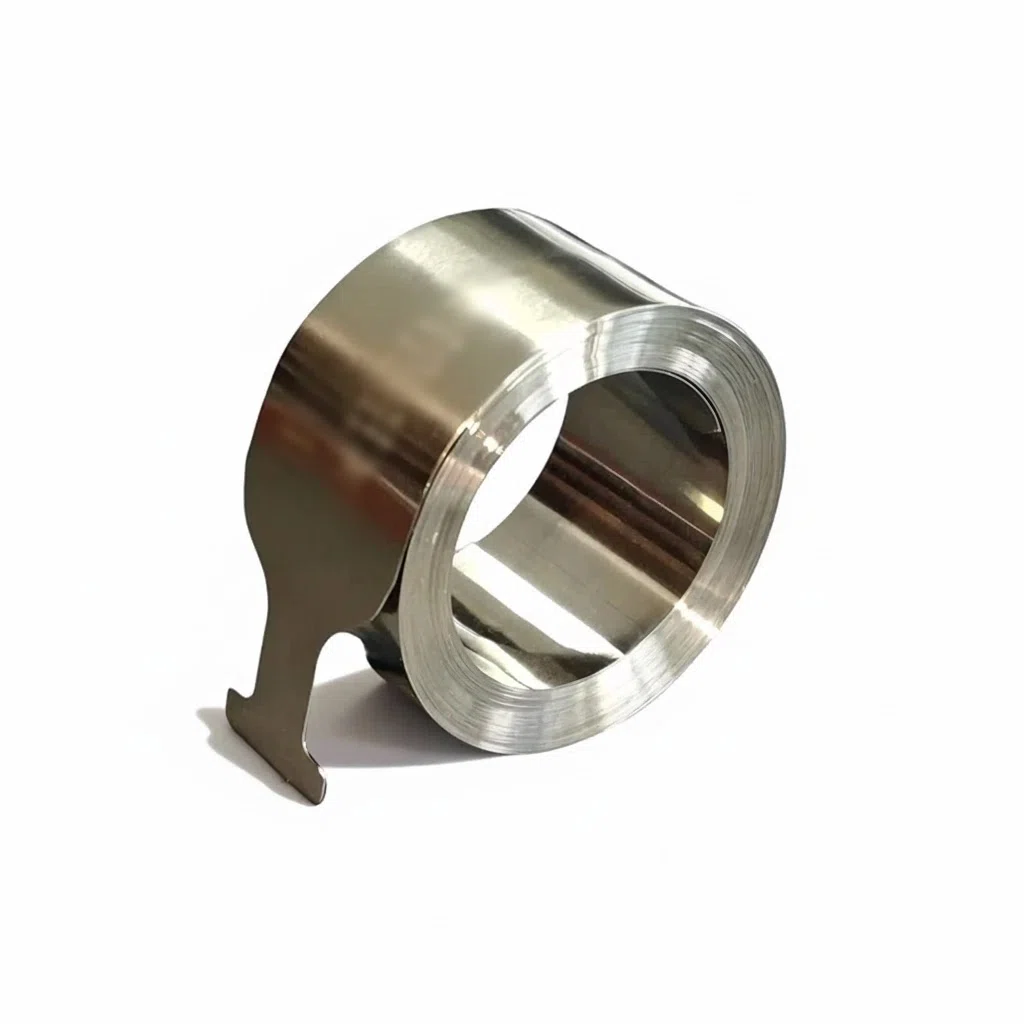
But in a cordless system, the spring is not a component.It is the energy engine.
Every decision made at the spring level propagates forward:
user pull force, lift speed, brake load, noise, and—most critically—how the system behaves after aging.This is why a $0.50 cheaper spring rarely stays a $0.50 decision.
1. The False Economy of BOM-Only Thinking
On paper, the comparison looks simple:
| Option | Unit Cost | Material | Cycle Spec |
|---|---|---|---|
| Spring A | $1.20 | 301 stainless / controlled heat | 50,000 cycles |
| Spring B | $0.70 | carbon steel / generic temper | “Passes initial test” |
Procurement logic says:
“They look the same. Save $0.50.”
Engineering reality says:“They will not age the same.”
And aging—not initial feel—is what customers experience.
2. What the $0.50 Usually Removes
A cheaper spring almost never saves cost in one place.
It saves cost by removing layers of control.
What the $0.50 Cheaper Spring Typically Sacrifices
| Engineering Dimension | Controlled Spring | $0.50 Cheaper Spring | Field Impact |
|---|---|---|---|
| Material grade | 301 / treated spring steel | Generic carbon steel | Higher force decay, corrosion risk |
| Heat treatment | Quench + temper controlled | Batch temper only | Residual stress, inconsistent torque |
| Force tolerance | ±5% | ±12–18% | Mid-height drift, uneven feel |
| Surface finish | Passivated / dry-film | Raw or minimal coating | Noise growth, brake overload |
| Cycle validation | 20k / 50k verified | Initial feel only | Early complaints after 6–18 months |
2.1 Material Margin
- Lower elastic limit
- Higher force decay per cycle
- Reduced corrosion resistance
Measured difference after 20,000 cycles:
- Premium spring: ≤ 5% force loss
- Budget spring: 12–18% force loss
That difference directly translates into:mid-height drift, slow rise, or rebound complaints.
2.2 Heat Treatment Consistency
Skipping controlled quench/temper saves cents.
It also introduces:
- Residual stress
- Inconsistent force curves
- Early fatigue cracking
In lab terms: wider deviation bands.In field terms: “Some units feel fine. Others don’t.”
2.3 Surface & Friction Control
Lower-cost springs often remove:
- Passivation
- Dry-film lubrication
- Edge finishing
Result:
- Brake sees higher torque spikes
- Noise rises over time
- Brake wear accelerates
That $0.50 didn’t just cheapen the spring.It overloaded the entire system.
3. How Small Force Errors Become Big Failures
Cordless systems are force-balance systems.They operate in a narrow window.
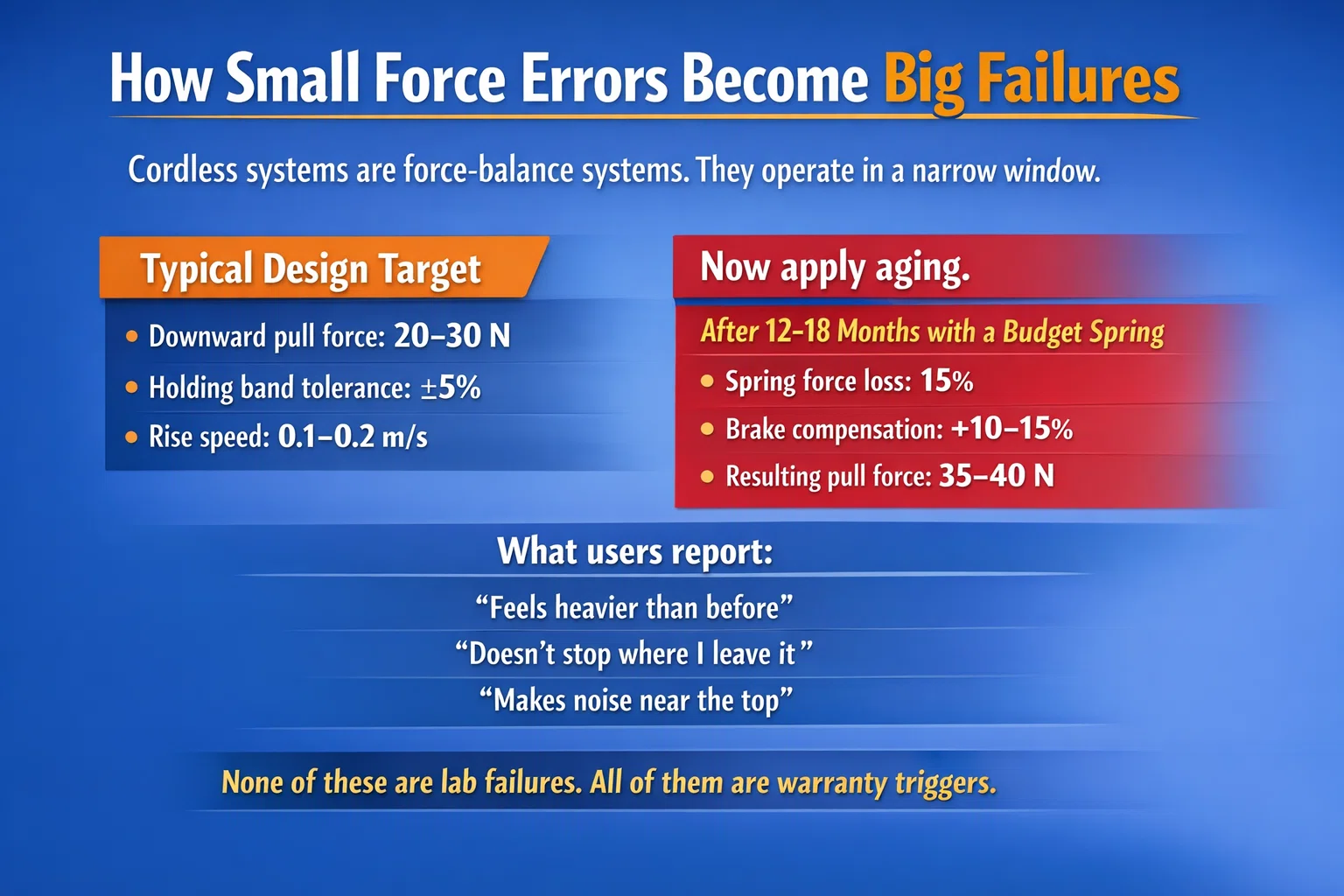
Typical Design Target
- Downward pull force: 20–30 N
- Holding band tolerance: ±5%
- Rise speed: 0.1–0.2 m/s
Now apply aging.
After 12–18 Months with a Budget Spring
- Spring force loss: 15%
- Brake compensation: +10–15%
- Resulting pull force: 35–40 N
What users report:
- “Feels heavier than before”
- “Doesn’t stop where I leave it”
- “Makes noise near the top”
None of these are lab failures.All of them are warranty triggers.
4. The Real $50 Cost Breakdown
Let’s translate field behavior into money.
The Real Cost Multiplier of a Cheaper Spring
| Failure Trigger | Direct Cost | Hidden Cost | Typical Total |
|---|---|---|---|
| Pull force complaints | $6–8 support handling | Brand trust erosion | $10+ |
| Mid-height drift | $10 replacement logistics | Installer dissatisfaction | $15–20 |
| Noise / rebound issues | $15 on-site service | Negative reviews | $20+ |
| Repeat failure risk | $0 immediate | Lost reorder / delisting | $10–15+ |
| Total per incident | $40–55 (typical) | ||
All triggered by a spring that was $0.50 cheaper.
The math is not subtle.It’s just usually invisible—until it isn’t.
5. Why Brakes Get Blamed (But Springs Are the Cause)
In the field, complaints often say:
- “Brake slipping”
- “Brake noisy”
- “Brake inconsistent”
But brakes don’t generate energy.They only manage it.
When spring output decays or spikes:
- Brake operates outside design window
- Friction surfaces glaze or chatter
- Damping becomes unstable
Replacing the brake without fixing the spring is like changing tires on a misaligned axle.
6. Why Premium Brands Specify “Overkill” Springs
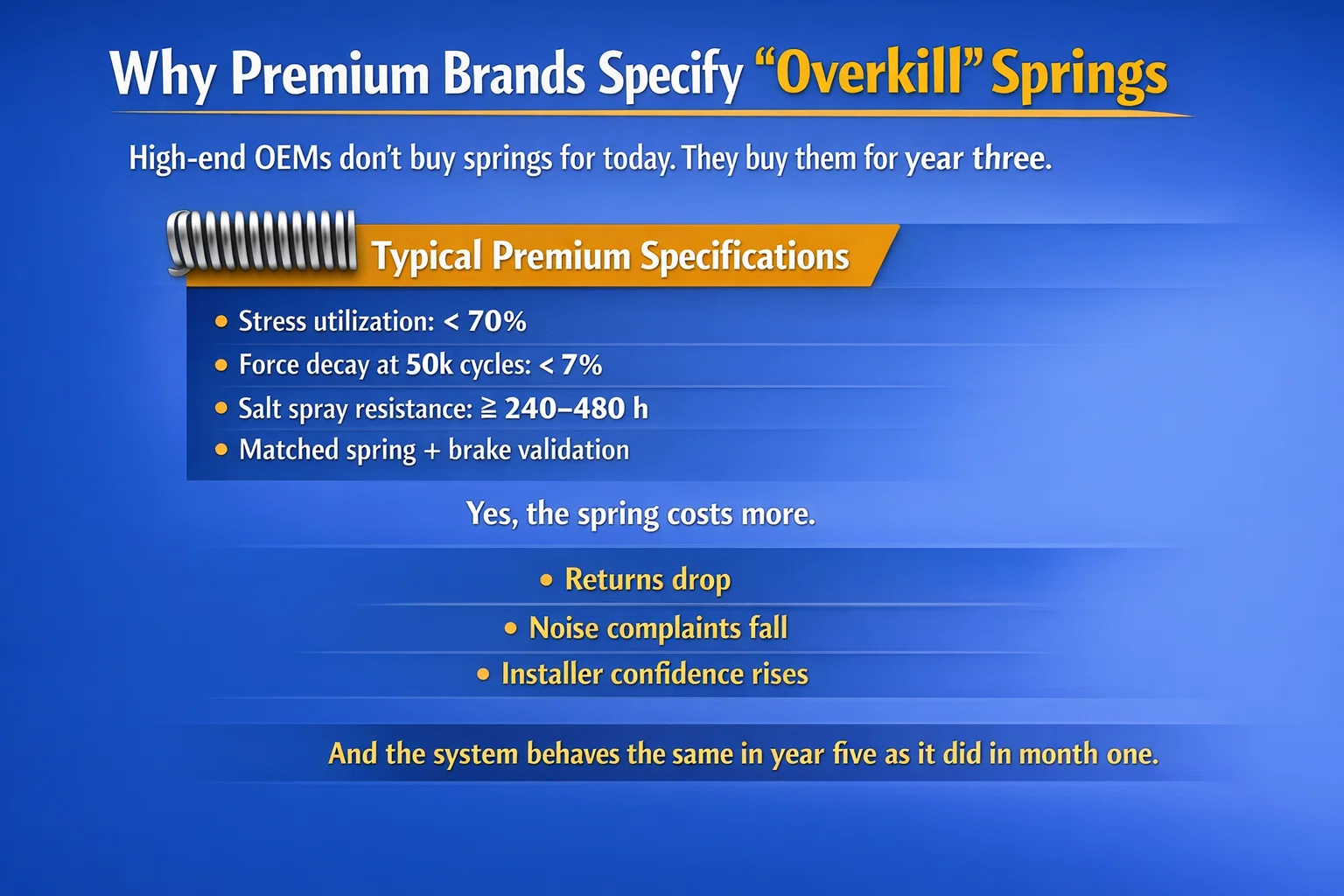
High-end OEMs don’t buy springs for today.They buy them for year three.
Typical Premium Specifications
- Stress utilization: < 70%
- Force decay at 50k cycles: < 7%
- Salt spray resistance: ≥ 240–480 h
- Matched spring + brake validation
Yes, the spring costs more.
But:
- Returns drop
- Noise complaints fall
- Installer confidence rises
And the system behaves the same in year five as it did in month one.
7. A Simple Rule for Sourcing Decisions
Before approving a cheaper spring, ask three questions:
- What is the measured force decay after 20k / 50k cycles?
- How does brake torque change when paired with this spring?
- Who absorbs the cost if field behavior shifts?
If the answers are unclear,the $0.50 is not a saving.It’s a deferred invoice.
Field Insight
Cordless failures are rarely dramatic.They are gradual, quiet, and expensive.
A cheaper spring doesn’t break the system on day one.It slowly pushes every other component out of balance—until users feel it, installers report it,and brands pay for it.
In cordless engineering,
the cheapest spring is often the most expensive decision.
Summary
A $0.50 cheaper spring is rarely a sourcing win—it is a deferred system cost.
In cordless lift systems, spring behavior governs force balance, brake load,
noise evolution, and long-term user perception.
What begins as a minor BOM optimization often reappears as
warranty claims, service labor, and lost brand trust.
Engineering-led brands understand this reality:
they do not buy springs for day-one performance,
but for year-three stability.
In lifecycle terms, the cheapest spring is often the most expensive decision.