
Eco-Friendly Modular Cordless Systems for Sustainable Brands:
Cut Waste Without Sacrificing “Premium Feel”
If your brand is serious about sustainability, your blind lift system can’t be a sealed black box that gets trashed at the first failure.
A modular cordless architecture is one of the fastest ways to reduce whole-product waste—while improving repairability, compliance, and long-term user experience.
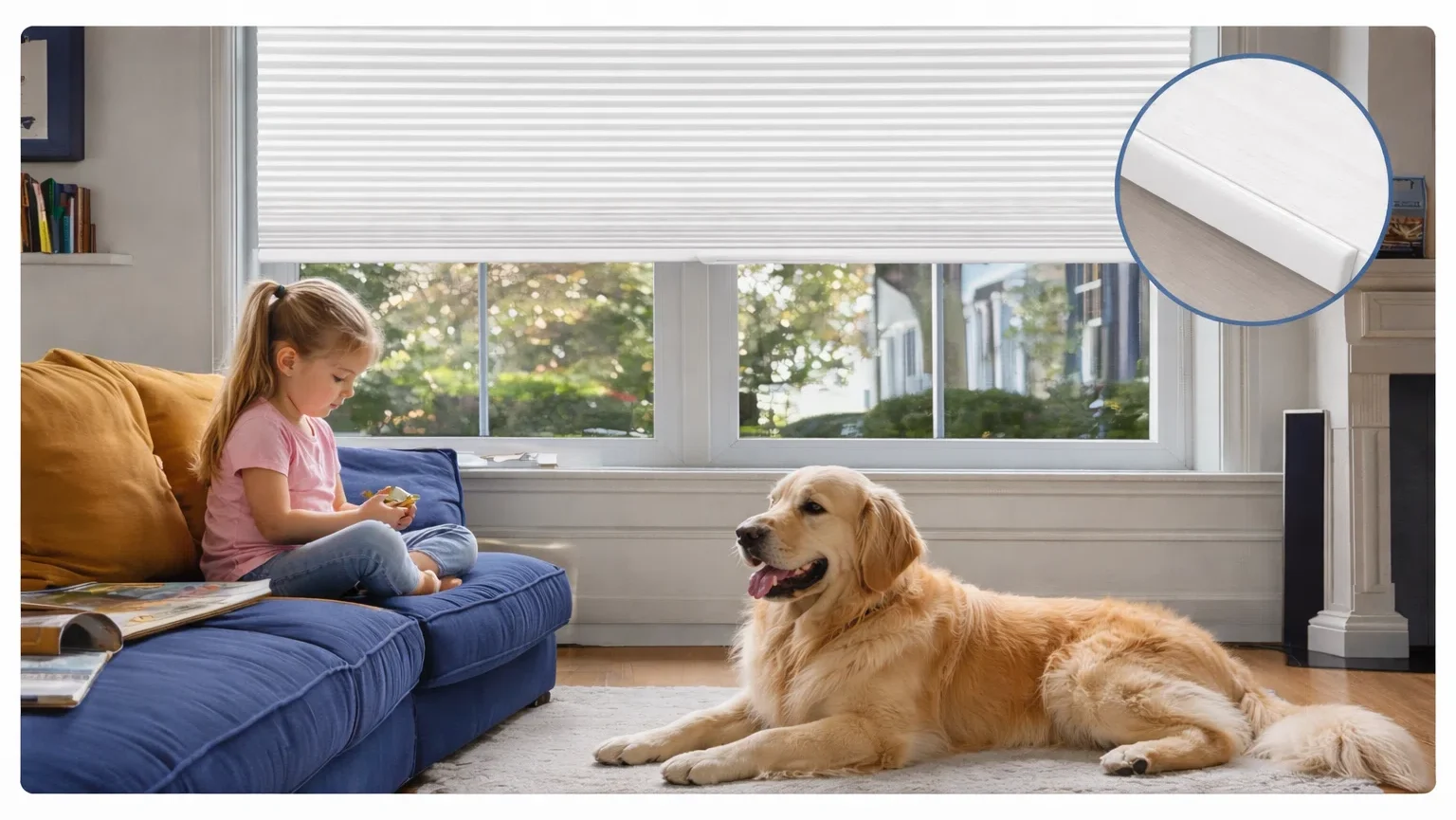
Quick Summary
Sustainable blind brands win faster when they treat the lift system as a serviceable platform, not a disposable part.
A modular cordless design typically focuses on:
- Design-for-disassembly: replace the spring/brake module without scrapping tube + fabric.
- Material discipline: fewer mixed materials, more recyclable metals, and controlled polymer choices.
- Right-sized torque: stable lift feel reduces returns (returns are the opposite of “eco”).
- Packaging reduction: smaller SKUs, tighter packing, fewer freight emissions.
- Claim safety: align “eco” marketing with substantiation rules (EU + US are tightening scrutiny).
1) Why “Modular + Cordless” Is a Sustainability Multiplier
 |
|
“Eco-friendly blinds” often get marketed as fabric-only (recycled yarns, PVC-free, etc.). That helps—but it ignores where many failures happen:
the hidden drive stack inside the headrail/tube. When the lift system is not serviceable, a minor torque drift can turn into a full blind replacement.
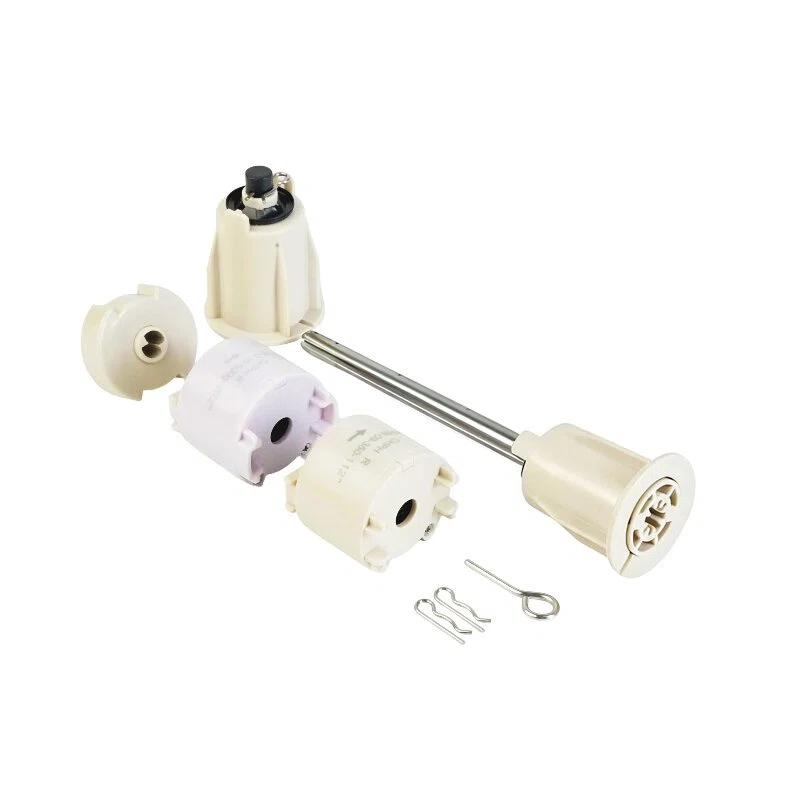
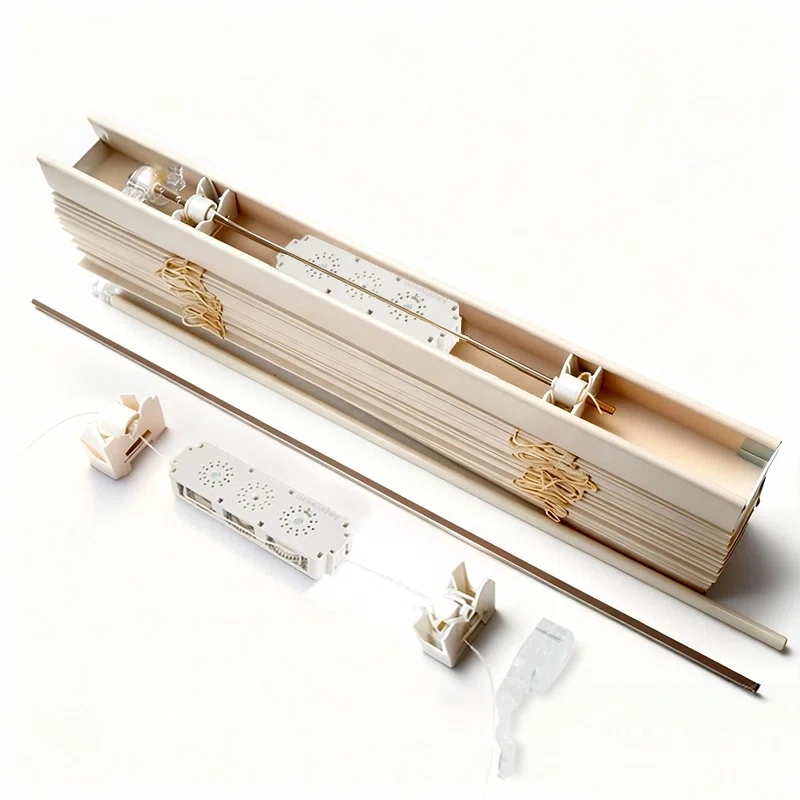
A modular platform flips that equation: you keep the long-life parts (tube, brackets, fabric), and swap the short-life or wear-sensitive core (spring/brake module).
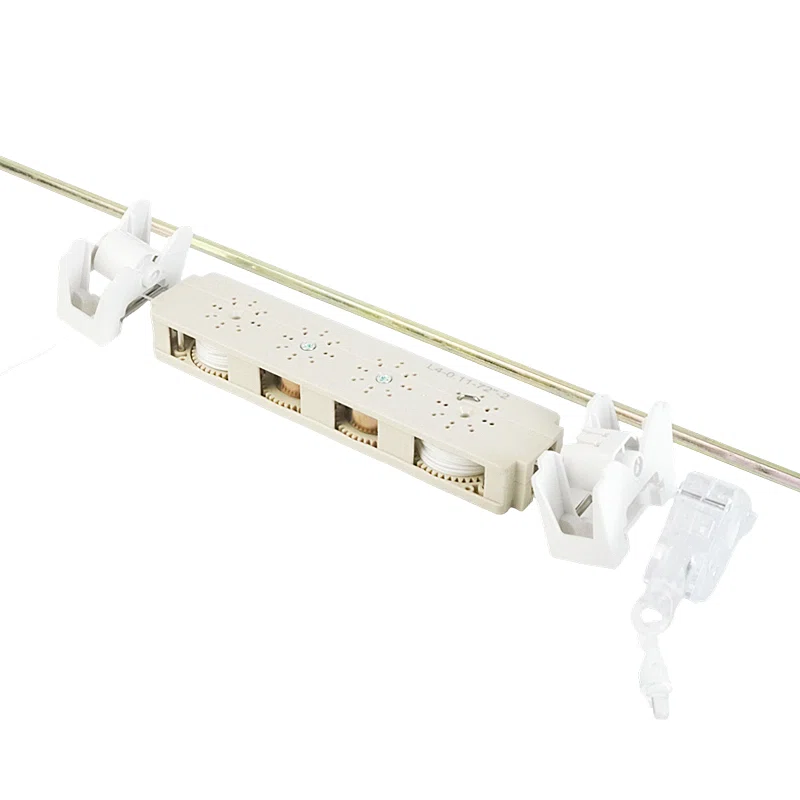
Cordless matters here too: no external hanging cords or bead chains means fewer auxiliary parts, simpler front-view aesthetics, and fewer “add-on safety fixes”
that complicate BOM and packaging.
1.1 What “Modular” Actually Means (Not Just a Buzzword)
- Replaceable energy module: spring box / spiral spring module is removable and standardized.
- Replaceable speed-control module: brake/damper can be tuned by load band (no one-size-fits-none friction guessing).
- Standard interfaces: tube diameters (e.g., Ø32 / Ø38 mm families), shaft profiles, end-plug geometries.
- Service workflow: swap-out can be done without destroying the blind assembly.
2) Eco-Design Checklist for Cordless Lift Platforms
2.1 Design for Disassembly (DfD): “One Screw Away” Beats “One Trash Bin Away”
If a module can’t be removed cleanly, “repairable” becomes a brochure fantasy. Aim for:
- Mechanical fasteners (clips/screws) over permanent adhesives where possible.
- Clear separation between polymer covers and metal load paths (easier sorting at end-of-life).
- Non-destructive access to spring/brake without cutting the tube or fabric.
2.2 Material Strategy: Sustainability Is a Materials Math Problem
Sustainable brands typically ask for recycled content or low-impact materials. The engineering reality:
you must keep dimensional stability, fatigue resistance, and low noise. For spring-driven cordless systems,
the core mechanics are commonly based on spiral torsion / constant-force behavior and long cycle life targets. :contentReference[oaicite:0]{index=0}
- Metals: prioritize highly recyclable metals for shafts/housings where feasible; specify corrosion resistance for humid markets.
- Polymers: use recycled polymers only where they do not compromise creep, wear, or acoustic performance; lock in resin traceability.
- Surface & friction: low-friction interfaces reduce squeak/chatter and extend life—quiet durability is a sustainability feature (less replacement).
2.3 Packaging: Europe Is Raising the Bar
If you sell into the EU, packaging design is no longer “just the carton.” The EU’s Packaging and Packaging Waste Regulation (PPWR)
entered into force on 11 February 2025, with a general application date 18 months later (mid-2026).
Modular systems help because they reduce SKU chaos and enable smaller, standardized pack formats.
 |
 |
3) Quantify Sustainability Without Hand-Waving
Sustainable brands get stuck when “eco” stays qualitative. Here’s a practical KPI set you can attach to a modular cordless program(use your own measured data—don’t guess and pray).
| Category | KPI | Suggested Target Band (Example) | Why It Matters |
|---|---|---|---|
| Repairability | Module swap time | 5–15 min (installer trained) | Short repair time = fewer replacements. |
| Durability | Cycle life to spec | ≥ 50k–100k cycles (platform goal) | Longer life = lower lifecycle footprint. :contentReference[oaicite:2]{index=2} |
| Returns | Drift / creep at mid-height | Hold 60 s @ 50% drop (no visible drift) | Returns are “hidden carbon.” |
| Packaging | Packaging volume per unit | -10% to -25% vs legacy pack | Lower freight + easier compliance in the EU. :contentReference[oaicite:3]{index=3} |
| SKU efficiency | Platform coverage | One brake architecture, multiple load bands | Less inventory waste, simpler procurement. |
4) “Eco” Claims: How Not to Get Your Marketing Team in Trouble
Two realities in 2025–2026: (1) regulators dislike vague claims, and (2) competitors love reporting vague claims.
In the EU, the Commission’s “Green Claims” initiative is built around substantiation using robust, verifiable methods. :contentReference[oaicite:4]{index=4}
In the US, the FTC’s Green Guides remain the central reference for environmental marketing claims (and scrutiny is rising even when guidance updates lag). :contentReference[oaicite:5]{index=5}
4.1 Claim-Safe Language (Practical Examples)
- Instead of: “Eco-friendly mechanism” → Use: “Designed for repairability with replaceable spring/brake modules.”
- Instead of: “Recyclable” → Use: “Metal components are commonly recyclable where facilities exist; polymers are identified for sorting.”
- Instead of: “Low carbon” → Use: “Packaging volume reduced vs previous generation; quantified using internal shipment data.”
5) Spec Framework: Modular Cordless Platform That Sustainable Brands Actually Want
Sustainable brands usually care about four things at once: performance, auditability, repairability, and platform reuse.
Here’s a clean spec outline you can hand to an OEM/ODM partner.
5.1 Platform Interfaces
- Tube families: Ø32 mm and Ø38 mm platform (same design logic, different torque bands).
- Module naming: load bands by blind weight + drop, not by “mystery part number.”
- Serviceability: defined removal method without tube/fabric destruction.
5.2 Torque & Feel Acceptance Limits (Example Test Plan)
- Pull-down force at 25% / 50% / 75% drop
- Rise time (full drop → top)
- Mid-height hold (50% for 60 s)
- Noise check (listen for squeak/chatter; measure if you have a standard setup)
FAQ
Q1: Does “modular” make cordless blinds less reliable?
Not if interfaces are engineered correctly. Modularity can increase reliability by reducing tolerance stack-up chaos and enabling
load-banded tuning instead of one brake doing a bad job for every blind size.
Q2: Can we use recycled plastics in the module?
Sometimes. Use recycled polymers where creep, wear, and noise risk stay controlled. Document resin grade, lot traceability, and performance deltas
versus virgin material (especially for brake friction stability).
Q3: What’s the biggest “greenwashing trap” for blind hardware?
Unqualified claims like “eco-friendly” or “100% recyclable” without clear scope, conditions, or proof. Build claims around measurable outcomes:
repairability, packaging reduction, and durability.
Q4: How does the EU packaging rule affect blind brands?
PPWR pushes packaging reduction, recyclability, and broader lifecycle controls. Since it entered into force in Feb 2025 and generally applies about
18 months later, brands selling into the EU should align packaging specs now—not in a panic later. :contentReference[oaicite:7]{index=7}
Q5: How do we prove environmental claims credibly?
Use verifiable methods and keep documentation ready (test reports, material declarations, shipment packaging data). The EU’s Green Claims workstream
is explicitly built around substantiation and verification. :contentReference[oaicite:8]{index=8}
Q6: What makes a cordless system “sustainable” besides materials?
Longevity + fewer replacements. A quiet, stable lift feel that stays stable over time prevents returns, callbacks, and early disposal—often the biggest real-world footprint driver.
Field Insight
If you want an “eco” product line that survives customer reality (humidity, daily abuse, installer errors), don’t start with marketing claims.
Start with a platform blueprint:
(1) standardized tube interfaces (Ø32/Ø38),
(2) load-banded spring + brake modules,
(3) service workflow,
(4) packaging reduction plan aligned to EU PPWR timelines,
and (5) claim substantiation files ready before the first brochure is printed.
Sustainability is not a color. It’s an operating system.