
From Window Covering to Mechanical Platform

A cordless blind does not fail because it is poorly assembled.
It fails when a covering is asked to behave like a platform—
without being engineered as one.
Quick Summary
As cordless blinds increase in size, usage frequency, and lifespan expectations,
they stop behaving like passive window coverings and begin acting as mechanical platforms.
In this transition, issues such as uneven lift, drift, noise, and loss of holding stability
are not isolated defects—they are signals of platform-level imbalance.
Understanding cordless systems as mechanical platforms explains why
smooth operation, simple testing, and component-level fixes
often fail to predict real-world performance.
1) The Invisible Transition Most Designs Ignore
Traditional window coverings were designed as passive products.
The user supplied energy, corrected imbalance, and tolerated inconsistency.
The mechanism’s role was limited.
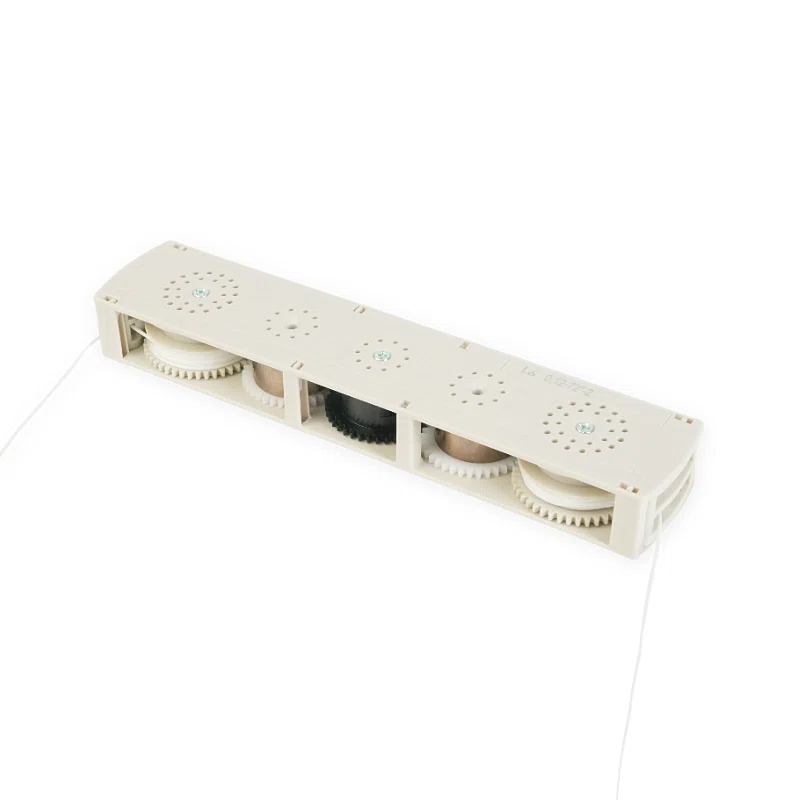
Cordless systems changed this relationship.By removing the cord, responsibility shifted from the user to the system.What was once a covering became a self-governing mechanism.
The critical mistake many designs make is treating this change as an interface upgrade rather than a structural transformation.The product looks simpler.The mechanics are not.
 |
|
When user correction disappears, the system must regulate itself—
continuously and invisibly.
2) When a Blind Becomes a Platform
A mechanical platform is defined by three characteristics:
- It must perform consistently across a wide range of conditions
- It must tolerate variation without visible failure
- It must age predictably
Narrow, lightly used cordless blinds can sometimes avoid this transition.
Wide blinds, frequent operation, and long drops cannot.
At that point, the system behaves like a platform:
small force mismatches are amplified, friction changes become visible, and left–right symmetry becomes a design constraint rather than an assumption.
3) Platform Thinking Explains Every “Mystery” Failure
Most common cordless complaints are not random. They are platform signals.
| Observed Issue | Surface Explanation | Platform-Level Reality |
|---|---|---|
| Uneven lift | Installation or fabric issue | Left–right force imbalance amplified by width |
| Mid-position drift | Weak brake | Unstable force band across travel |
| Noise after months | Material wear | Friction evolution exposing imbalance |
| “Worked fine at first” failures | Quality variation | Platform aging revealing weak margins |
When these issues are treated individually,
fixes tend to chase symptoms.
Platform thinking changes the diagnostic question entirely.
4) Why Component-Level Fixes Stop Working
It is tempting to solve cordless problems by upgrading individual parts:
stronger springs, tighter brakes, stiffer rails.
Component upgrades can improve localized performance,
but platforms fail at interfaces.
The interaction between spring output, braking authority,
geometry, and aging determines stability—not the strength of any single part.
This is why:
- More force can worsen rebound
- More friction can increase noise
- Tighter tolerances can still drift over time
Platform behavior cannot be fixed part by part.
It must be engineered as a system.
5) Scale Is the Truth Test
Small systems are forgiving.Platforms are not.
Width, drop, and usage frequency remove hiding places.They expose force mismatch, friction drift,
and stability margins that narrow systems can conceal.
This is why wide cordless blinds are not edge cases.They are early warning systems.
A design that scales cleanly behaves predictably everywhere else.
6) The Correct Question Platform Designers Ask
The wrong question is:
“Does this blind lift smoothly?”
The correct question is:

“Does this system maintain force balance,
symmetry, and holding stability
across size, usage, and aging?”
This shift in questioning is what separates
product optimization from platform engineering.
FAQ
Q1: At what point does a cordless blind become a platform?
When width, load, or usage frequency exceeds the system’s ability to self-correct minor imbalance.
At that moment, local tolerances stop averaging out, and the system must remain stable as a whole.
Q2: Are platform failures always visible immediately?
No. Many platform failures are latent.
They often pass showroom tests and only appear after aging, cycling, or environmental drift exposes force imbalance.
Q3: Why do platforms fail at interfaces?
Because stability depends on how forces interact, not on how strong individual parts are.
Interfaces amplify mismatch—spring output, brake authority, tube stiffness, and mounting tolerance must stay aligned.
Q4: Can testing catch platform issues early?
Only if testing includes full travel, wide formats, and post-aging evaluation.
Single-point pull tests and short-cycle demos miss most platform-level failures.
Q5: Is platform engineering more expensive?
Upfront, sometimes.
Over the product lifecycle, it is usually cheaper than managing returns, adjustments, and brand erosion caused by field failures.
Q6: Why do wide blinds expose problems faster than narrow ones?
Because width turns the system into a lever-driven structure.
Small left–right force differences that are invisible at 1.2 m become obvious tilt, drift, or noise at 2.5 m and above.
Q7: Can a stronger spring compensate for platform instability?
Rarely.
Increasing spring force may improve lift, but it often shrinks the stable force band, increasing rebound, sensitivity, and brake overload.
Q8: Why doesn’t a stronger brake solve platform issues?
Because a brake can only govern motion inside the force band.
If the band itself is unstable or drifting, added friction only masks symptoms while creating new problems.
Q9: Why do platform failures often appear near the top or bottom?
Because force balance changes across travel.
Spool diameter shifts, friction gradients, and spring curve edges expose instability at travel extremes first.
Q10: How should OEMs think differently once a blind becomes a platform?
Stop asking: “Does it feel smooth?”
Start asking:
-
Is the force band stable across full travel?
-
Is performance repeatable across production?
-
Do spring and brake remain matched after aging?
That’s the mental switch from product tuning to platform engineering.
Field Insight
Cordless blinds fail not because they are window coverings,
but because they are asked to behave like mechanical platforms
without being engineered as such.
Once you recognize platform behavior,
failures stop looking random—and start looking predictable.